
The Hidden ROI of a Conservation Journey: What You Gain Beyond a Tan
You've traveled widely. You know the difference between a good trip and a great one. But there's a category of return that most travel, however beautiful, simply doesn't deliver. Here's what conservation travel actually gives you, and why experienced travelers often say it's the most valuable thing they've ever done.
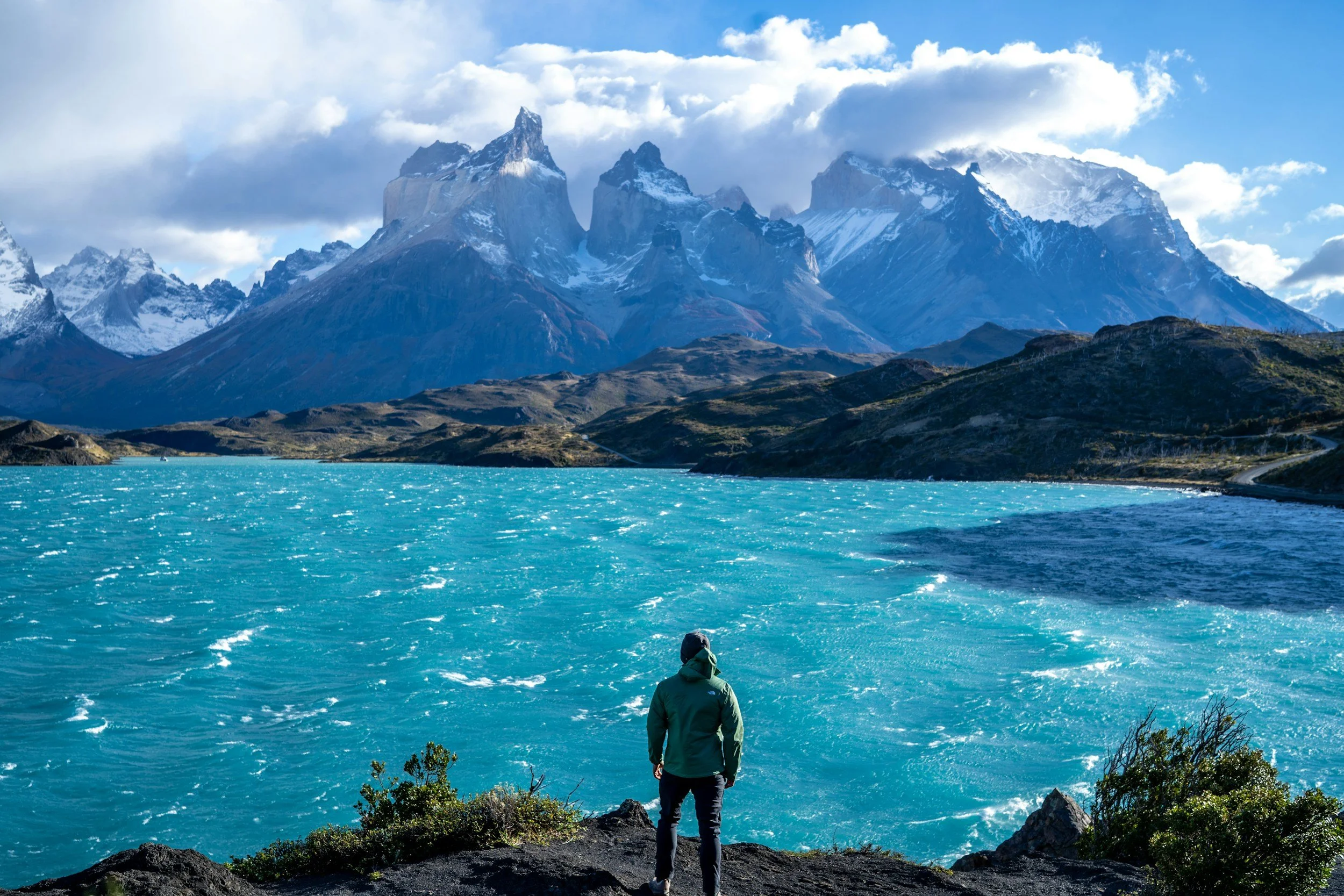
Standing at the base of Torres del Paine, Chile
Let's start with the question serious travelers actually ask when they look at a conservation journey: is it worth it?
Not worth it in the way a hotel review answers that question — the beds, the food, the views. Worth it in the deeper sense. Worth the recalibration of expectations, the longer flights, the premium price tag, the decision to spend two weeks somewhere purposeful rather than somewhere purely beautiful.
It's a fair question. And the honest answer is that it depends entirely on what you're measuring.
If you measure a trip by how smoothly it runs, by the quality of its sunsets, or by how comprehensively it removes you from your ordinary life — conservation travel will do all of those things, and do them well. But that's not where its value lies. Its value lies in a category of return that most travel, however exceptional, doesn't touch.
Here's what that looks like across six dimensions that experienced travelers consistently say they didn't anticipate.
01. Knowledge that permanently reshapes how you see the world
Most travel is horizontal. You move across a place, its landscapes, its food, its culture and you leave enriched but essentially unchanged in how you understand the world.
Conservation travel is vertical. It takes you beneath the surface of a place, into the ecological and human systems that sustain it, and the knowledge you gain there doesn't stay in that country. It comes home with you.
Travelers who spend time in Chile's Patagonia alongside the Rewilding Chile team don't just see a spectacular landscape. They learn what that landscape looked like twenty years ago — degraded, overgrazed, ecologically hollowed out — and what it has taken, in scientific effort and political will and sheer persistence, to begin restoring it. They learn to read a hillside for signs of recovery. They understand, in a way no documentary can quite replicate, what rewilding actually means in practice.
In Costa Rica, travelers who work alongside sea turtle conservancies leave with a precise understanding of nesting cycles, population tracking, and the specific threats facing leatherback turtles at different life stages. In India, spending time with wildlife biologists in snow leopard landscapes reframes what "biodiversity" means — not as an abstract concept but as a living system of relationships between apex predators, prey species, vegetation, and water.
This is knowledge with texture. Knowledge that changes how you read the news, how you think about land use, how you speak about conservation with the people in your life. It doesn't expire when you land.
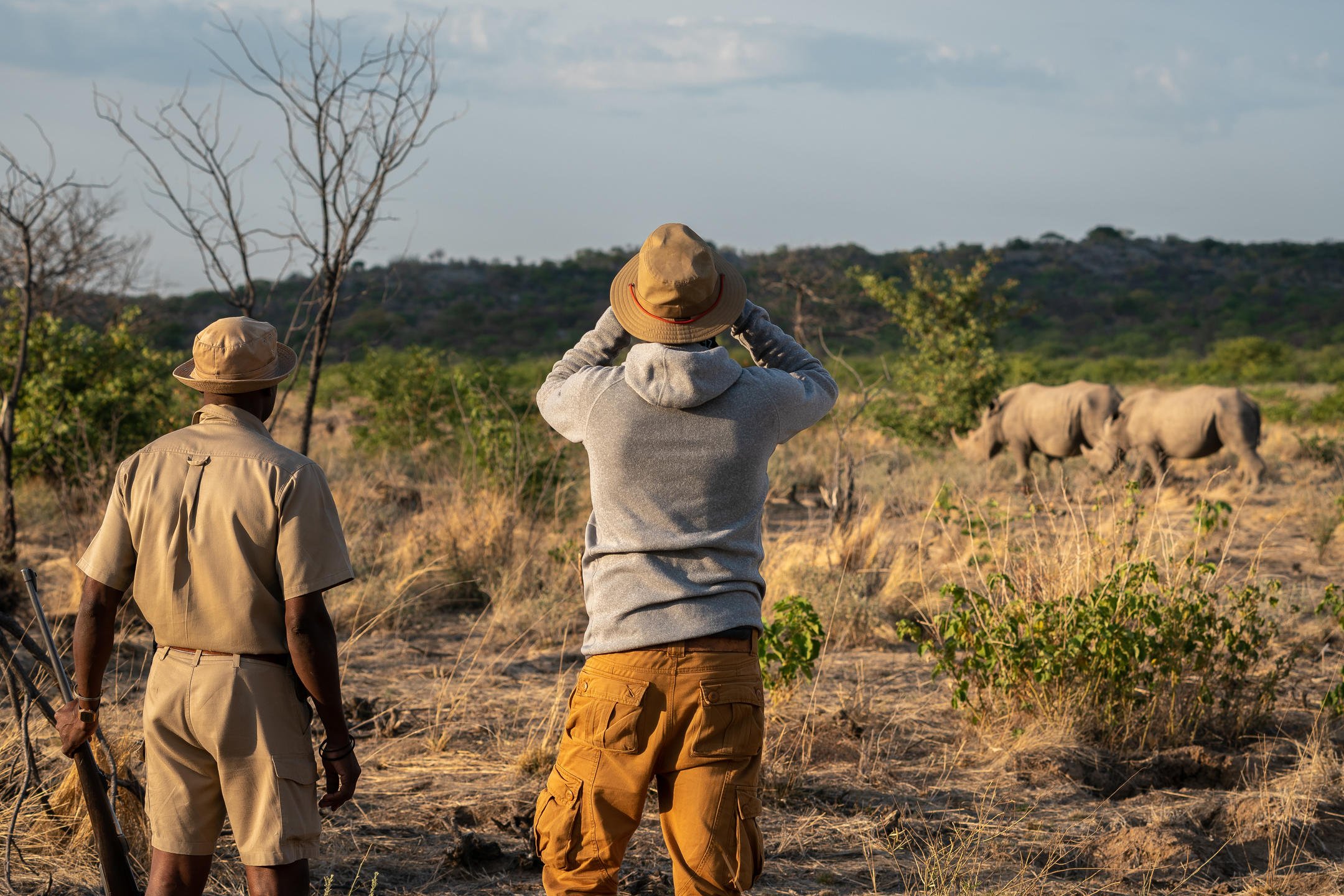
Rhino spotting in northern Namibia on the Ongava Reserve
02. Access that money alone cannot buy
There is a particular kind of access available on conservation journeys that is structurally unavailable to independent travelers, regardless of budget. It is not access to a better room or a more exclusive restaurant. It is access to the inside of a working conservation project — to the researchers, rangers, and community leaders whose time and attention cannot be purchased. It can only be earned through the kind of relationships that organizations like TerraFauna build over years.
In Namibia, that access looks like spending time with communal conservancy managers whose communities have transformed their relationship with wildlife from conflict to coexistence — and who will speak frankly, to the right visitors, about what that transformation actually cost and required. In Patagonia it looks like standing on a hillside with Tompkins Conservation as condors are released back into skies they hadn't occupied for decades.
These encounters are not manufactured for travelers. They are genuine points of contact with people doing serious, consequential work. And the conversations that emerge from them — unscripted, unhurried, between people who share a genuine concern for the same places — are among the most reported highlights of any TerraFauna journey.
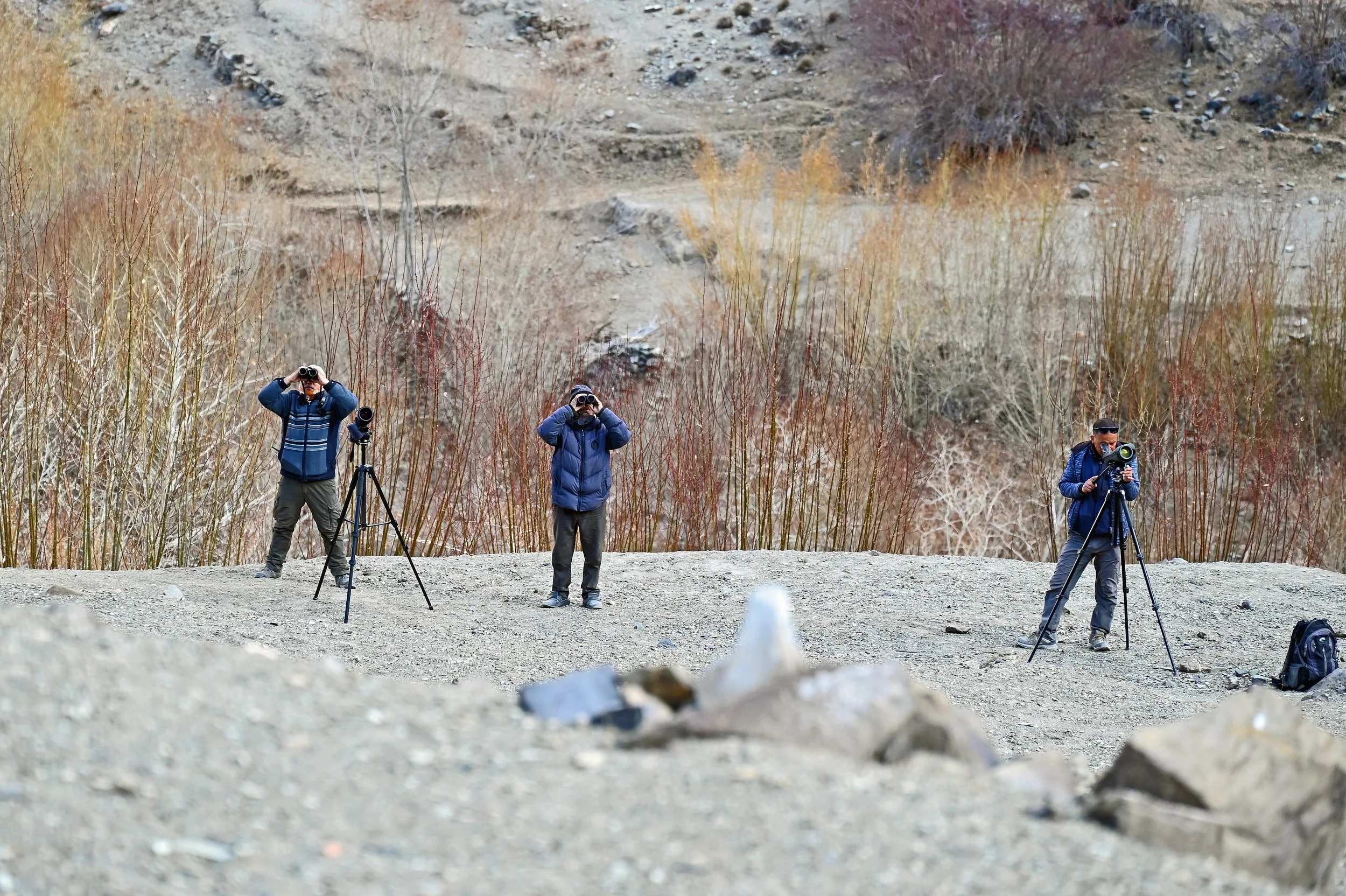
Snow Leopard spotters in Ladakh, India
03. A community of people who share your values
This is the return that surprises people most, because it sounds minor until you experience it.
TerraFauna journeys are small by design. A maximum of twelve travelers per group. The people who choose conservation travel as their vacation are, as a rule, curious, values-driven, and accustomed to going deep rather than wide. Spending two weeks with people like that in shared field experiences, around dinner tables, on long transfers through extraordinary landscapes — produces the kind of connections that don't dissolve when the trip ends.
Many of our travelers come alone. A significant number leave with friendships, professional relationships, and in some cases, collaborative conservation projects that continue long after the journey concludes. That is not something you can manufacture. But it is something that emerges, consistently, when you bring the right people into the right context.
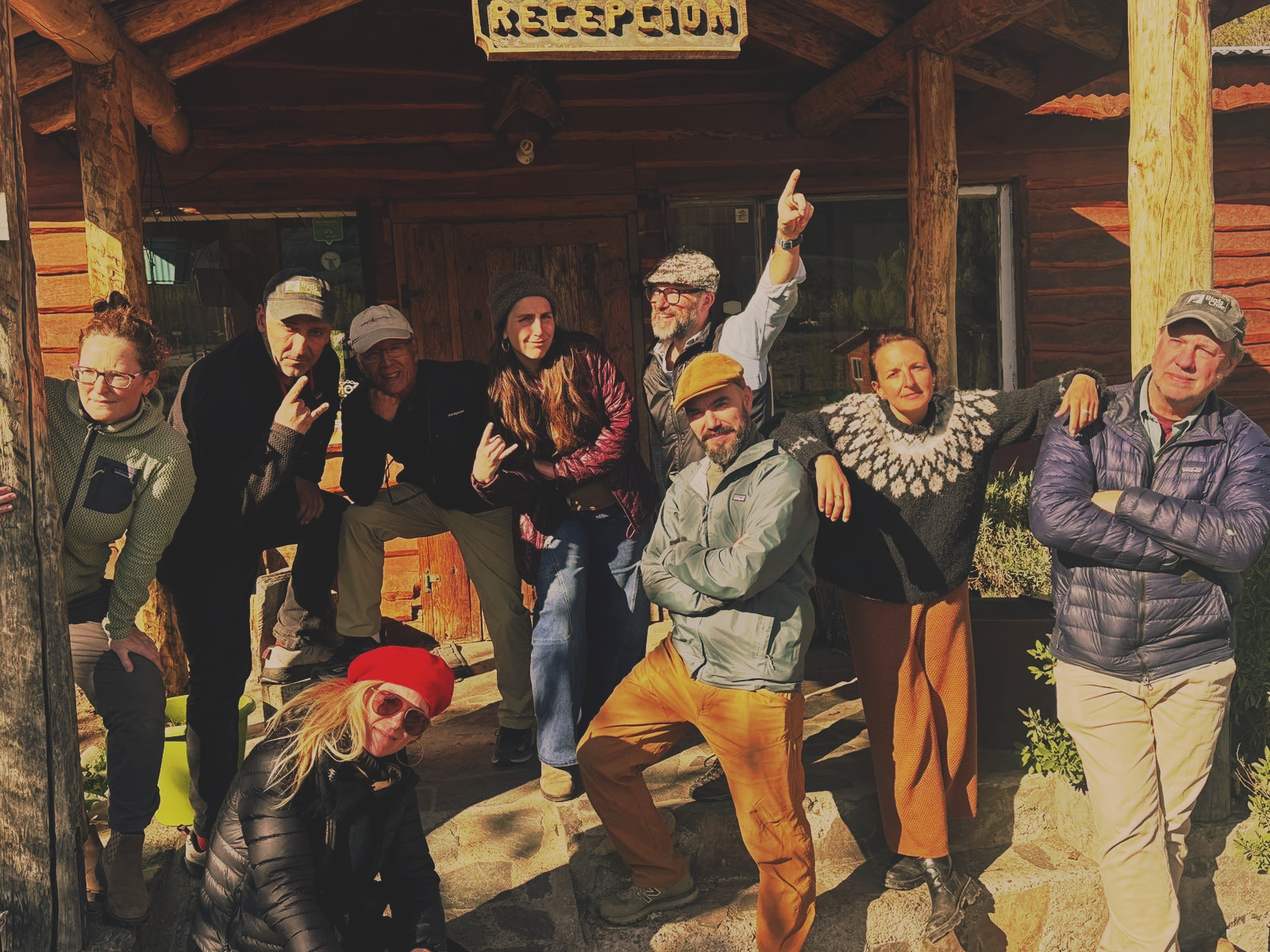
A TerraFauna crew of travelers in Chile
04. A renewed sense of personal agency
One of the quieter returns of conservation travel is difficult to name precisely, but experienced travelers recognize it immediately: the feeling of having done something that mattered.
This is not sentimentality. It is the specific psychological value of acting in alignment with your values, of spending your discretionary time and money in a way that contributes to something larger than your own experience of it. Research on purposeful activity consistently shows it produces a more durable form of satisfaction than pleasurable activity. You remember it differently. You carry it differently.
In Costa Rica, travelers who participate in overnight sea turtle monitoring, documenting nesting females, protecting eggs from poachers, releasing hatchlings at dawn describe the experience not as something they watched but as something they contributed to. In India, travelers who learn about the Snow Leopard Conservancy and the decades of conservation policy that pulled the Snow Leopard back from the edge of extinction leave with a clearer sense of what sustained effort actually accomplishes.
That sense of agency, the knowledge that your presence was useful rather than merely appreciative, is among the most reported long-term returns of a conservation journey. It changes not just how you remember the trip, but how you engage with conservation issues at home.
05. A measurable, direct conservation impact
Every TerraFauna journey is designed so that a meaningful portion of what you spend goes directly to the conservation projects you visit. This is not a carbon offset or a donation rounded up at checkout. It is structural built into how our journeys are priced and what they fund.
In practical terms, that means your presence in Patagonia contributes to the rewilding work of Rewilding Chile. Your journey to Namibia supports the communal conservancy model that has made that country one of Africa's great conservation success stories. In Costa Rica, it funds the monitoring and protection programs that have dramatically increased sea turtle nesting numbers over the past decade.
This is a form of ROI that is genuinely measurable not in financial terms, but in the ecological outcomes your travel helps sustain. For travelers who have spent years wanting to contribute meaningfully to conservation without knowing quite how, that clarity has real value.

Learning first hand from the research team located on the Osa Peninsula in Costa Rica
06. Memories built on depth rather than novelty
Experienced travelers know the diminishing returns of novelty. The twentieth spectacular view is not twenty times as memorable as the first. The tenth new country does not produce ten times the enrichment of the first. At a certain point in a life of travel, what you're looking for shifts from the new to the deep, from the beautiful to the meaningful, from what you can say you've seen to what you can say you understand.
Conservation travel is built for that shift. It is not optimized for Instagram. It is optimized for the kind of experience that stays with you for years, that you find yourself returning to in conversation, that changes the questions you ask about the world.
The travelers who come back from TerraFauna journeys most changed are rarely the ones for whom nature was new. They are often the ones who had been everywhere and were, quietly, looking for something they hadn't been able to name yet. What they found was depth. And depth, it turns out, compounds.

A close up encounter with a giant Manta Ray
So: is it worth it?
If you are measuring in sunsets and smooth logistics, a conservation journey competes with the best travel experiences in the world and wins on most counts.
But if you are measuring in the things that experienced travelers say they actually wanted — knowledge that lasts, access that's genuinely rare, a sense of having been somewhere real and done something that mattered — then the ROI of a conservation journey is not comparable to other travel. It is in a different category altogether.
The tan fades in two weeks. The rest of it doesn't.
Ready to see what's possible?
Our small group journeys to Chile, Costa Rica, Namibia, and India place you inside some of the world's most significant conservation stories. With the access, the expert guides, and the curation to make every day count. Explore our upcoming journeys →