
Namibia Safari: Track Black Rhino, Sleep in Star Beds & Chase the Milky Way with DarkSky International
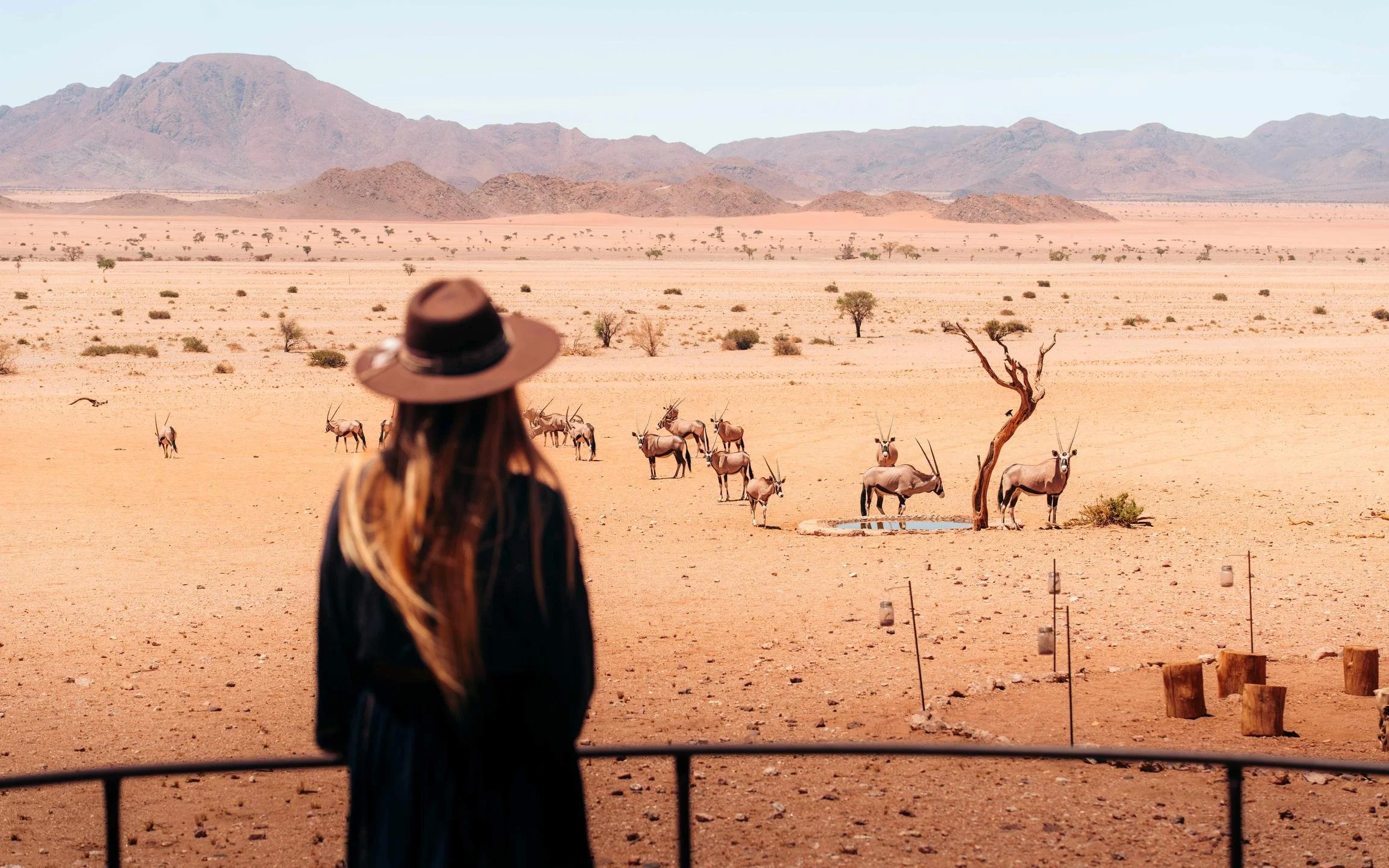
Photo Credit: Camp Sossus
There's a version of Namibia that shows up on every "bucket list" article: the towering red dunes of Sossusvlei, the ghostly Skeleton Coast, the waterholes of Etosha crowded with elephant and lion. It's stunning, and it's also only half the story.
The other half happens after the sun goes down when the temperature drops, the wildlife shifts into its truest rhythm, and the sky above one of the most sparsely populated countries on the planet does something almost no one on Earth still gets to witness: it goes completely, overwhelmingly dark.
That darkness isn't a gap in the itinerary. It's the point.
This is the story of a 15-day journey through Namibia that was built around that idea, where the days are spent tracking endangered wildlife with the people working to save it, and the nights are spent under some of the last truly dark skies left on the planet, guided by a woman who has spent her career fighting to keep them that way.
Why Namibia, and Why Now
Namibia is one of the only countries on Earth with a constitutional mandate for environmental protection — conservation isn't a marketing angle here, it's written into national policy. Nearly half the country is under some form of conservation management, and it shows: this is where you'll find some of the last free-roaming, desert-adapted black rhino and elephant populations left anywhere, animals that have adapted to survive in a landscape most species couldn't.
It's also, thanks to almost nonexistent light pollution and a government-protected dark sky reserve larger than some countries, home to some of the clearest views of the Milky Way available anywhere on the planet.
Very few trips are built to give you both of those things at the level they deserve. This one is.
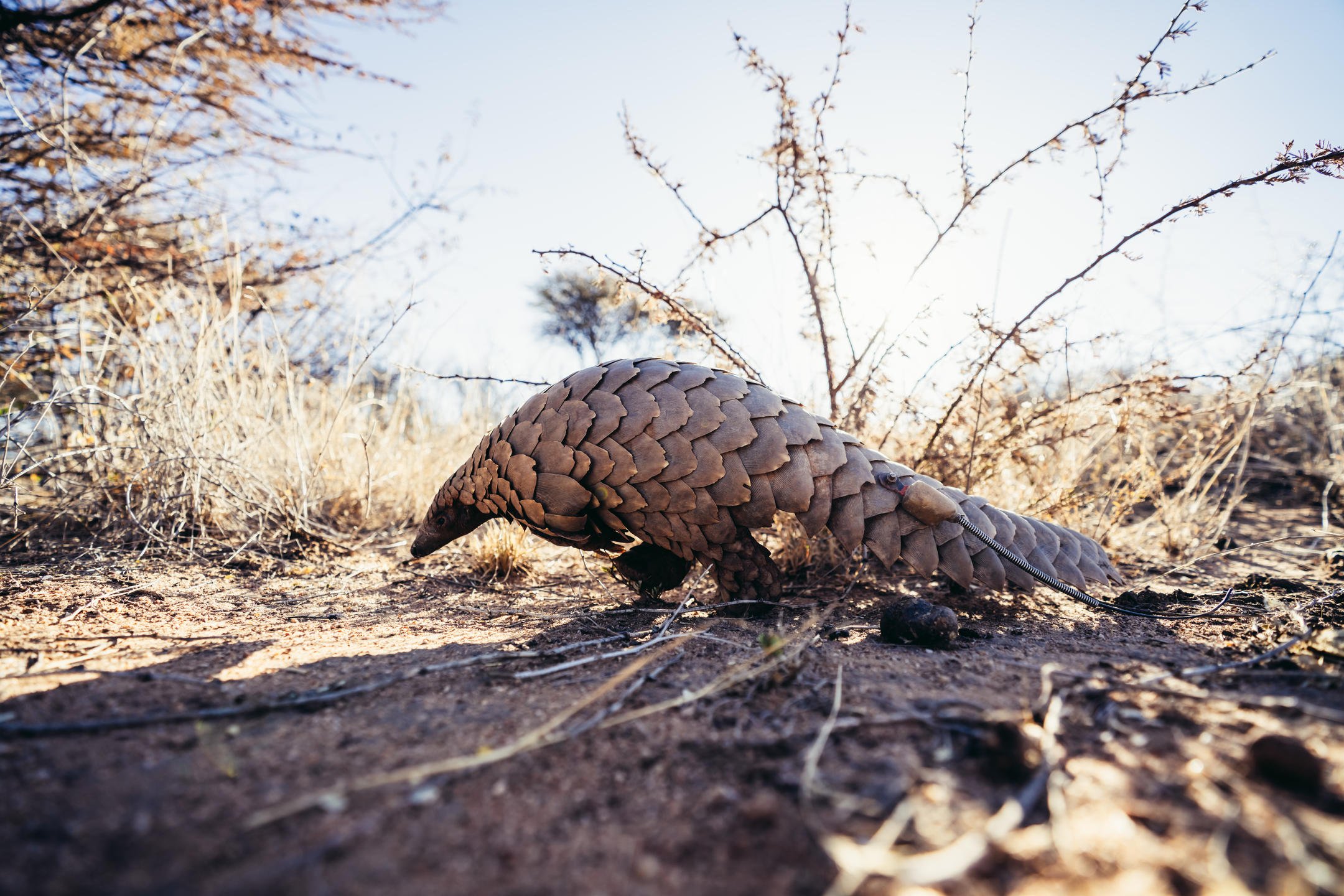
Photo credit: Okinjima Plains Camp
What Makes This Different: The TerraFauna Difference
Plenty of safaris promise "conservation." Fewer can show you exactly where your money goes. On this journey, nearly every stop is chosen because it directly funds the people doing the on-the-ground work not a general offset, but a direct line between your trip and a specific conservation outcome.
Here's what that actually looks like along the route:
AfriCat Foundation — founded in 1991 and based at Okonjima Nature Reserve, AfriCat works on carnivore conservation, research, and education focused on protecting Namibia's leopard and cheetah populations. Guests get a behind-the-scenes look at the research and tracking work happening in real time.
Save the Rhino Trust — in Damaraland, your visit supports the tracking teams and anti-poaching patrols protecting one of the last free-roaming populations of desert-adapted black rhino on Earth. You'll track rhino on foot alongside the people who do this work every day.
Ongava Research Centre — on the edge of Etosha National Park, this private reserve funds rhino conservation research and ecosystem protection across a restored landscape bordering the national park.
Namib Tsaris Conservancy — a living example of ecological restoration, where fences are coming down and wildlife corridors are being reconnected.
NamibRand Nature Reserve — spanning more than 200,000 hectares, this is one of the largest private nature reserves in southern Africa and a global model for low-impact, revenue-funded conservation.
Wolwedans and the 4Cs — Conservation, Community, Culture, Commerce. Revenue from every stay is reinvested directly into protecting the NamibRand ecosystem and the livelihoods around it.
Locally owned and operated camps are prioritized wherever possible throughout because tourism dollars that stay in Namibia are tourism dollars that actually protect Namibia.
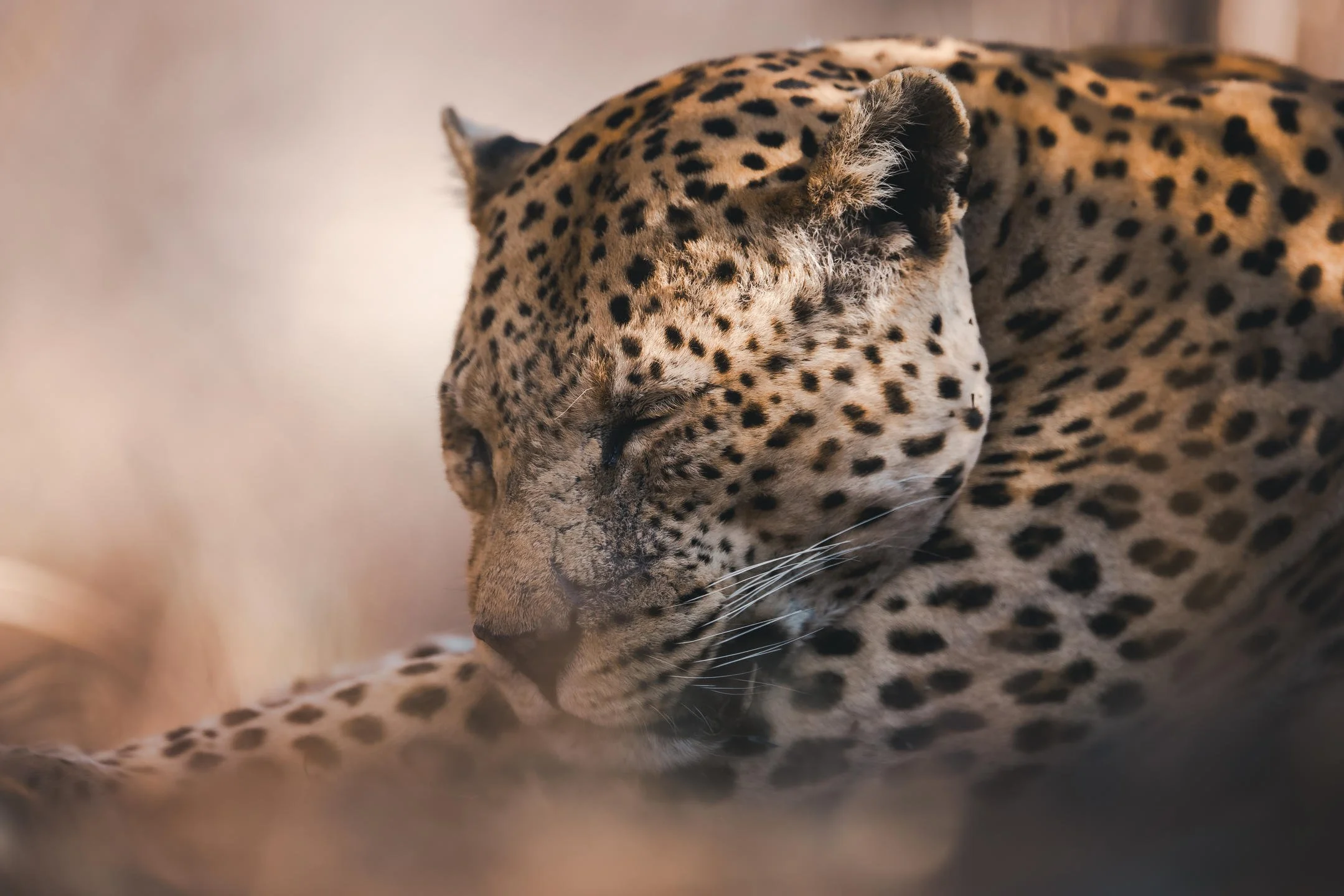
Photo copyright: Okinjima Plains Camp
Tracking Black Rhino on Foot, With the People Protecting Them
There's a specific kind of quiet that comes with rhino tracking. No engines. No radios crackling. Just footsteps, wind, and a guide reading the ground for signs most of us would walk right past.
In Damaraland, this journey puts you alongside expert trackers from Save the Rhino Trust, following the movement of one of the last free-roaming populations of desert-adapted black rhino left in the world. These are animals that survive in a landscape with almost no permanent water, adapted over generations to a place that shouldn't, by most standards, be able to support them.
The tracking itself can take hours. It requires patience, quiet, and a willingness to let the landscape set the pace instead of the itinerary. When a sighting happens, it tends to be the kind of moment people talk about years later not because it was staged, but because it wasn't.
Sleeping Under the Stars — Literally
At Camp Sossus in the Namib Tsaris Conservancy, and again in the NamibRand Nature Reserve, guests have the option to abandon the tent altogether and sleep in a star bed: a bed rolled onto the open-air rooftop of your accommodation, with nothing between you and the sky but the desert air.
It sounds like a novelty until you're actually lying in one. Somewhere around 200,000 hectares of protected land surrounds NamibRand, which means there's essentially no artificial light for miles in any direction. The Milky Way doesn't look like a smudge — it looks like a structure. Satellites move visibly overhead. Shooting stars aren't rare; they're a matter of when, not if.
This is where the trip's second guide comes in.
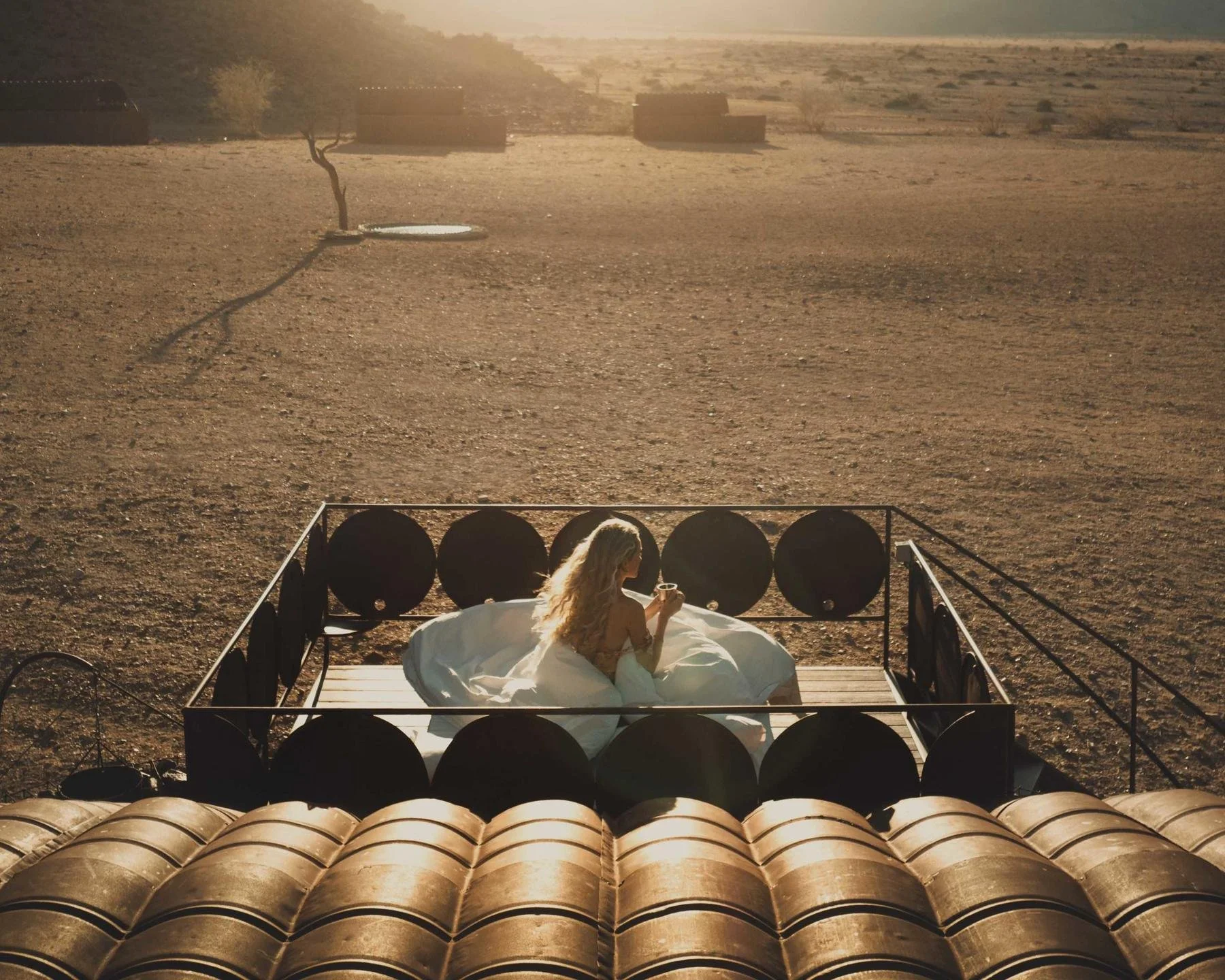
Photo copyright: Camp Sossus
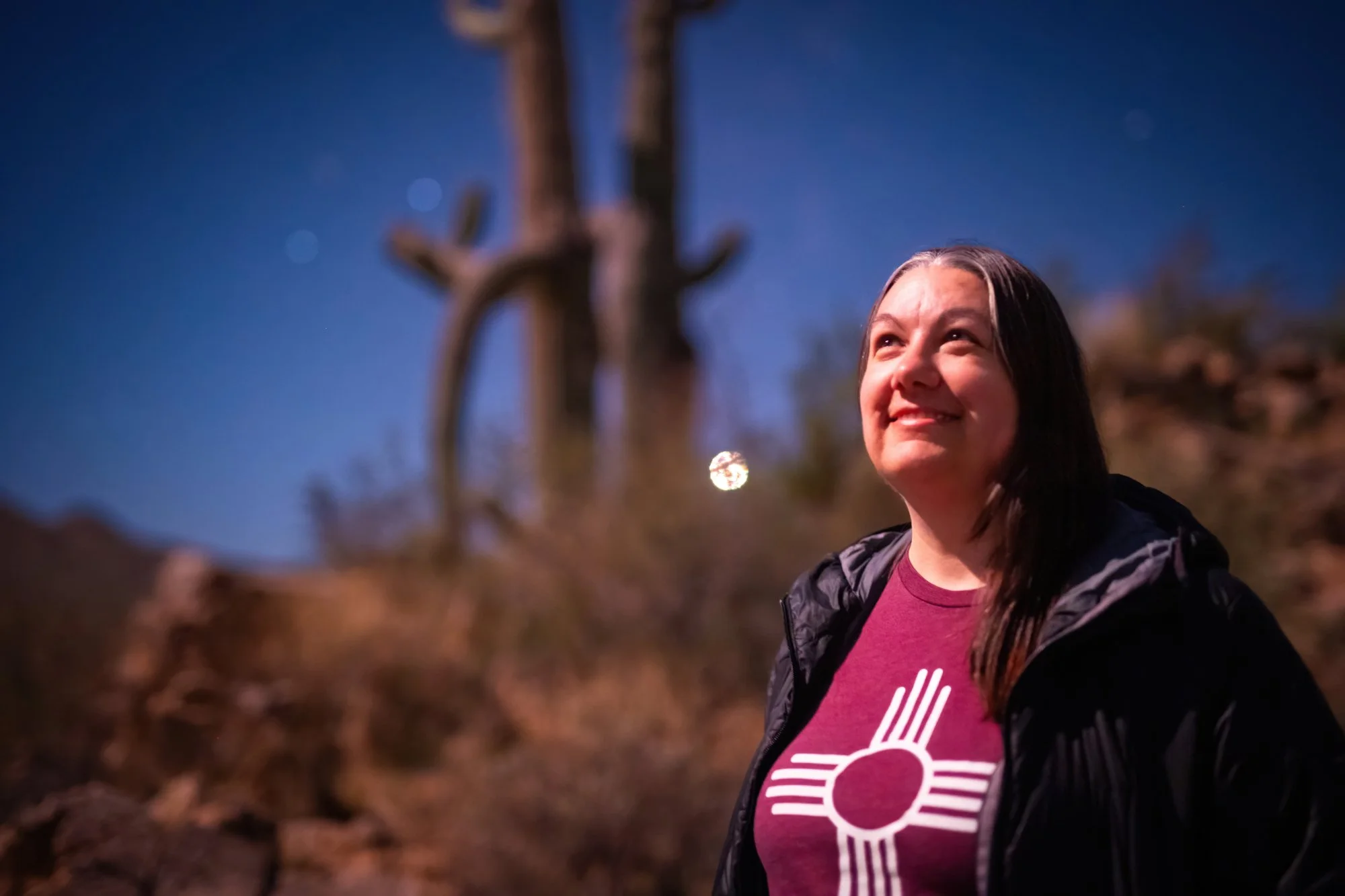
Meet Megan Eaves-Egenes: Your Guide to the Dark
Most safaris hand you a pair of binoculars and call it a day. This one hands you an astronomer.
Megan Eaves-Egenes is a Lowell Thomas Award-winning travel journalist, the editor of Nightscape magazine at DarkSky International, the founder of Dark Sky London, and a former editor at Lonely Planet. Her writing has appeared in BBC, National Geographic, and AFAR, and she's currently writing a book on the subject, Nightfaring: In Search of the Disappearing Darkness (2026).
Throughout the journey, Megan leads evening sessions on the night sky, light pollution, and — this is the part most people don't expect — how darkness itself is a conservation issue. Nocturnal wildlife, migratory patterns, insect populations, entire ecosystems: all of it is shaped by the presence or absence of natural darkness, and all of it is under pressure as artificial light spreads across the planet.
What Is Dark Sky International, and Why Does It Matter?
DarkSky International is the leading global authority on light pollution and the organization behind the designation of official Dark Sky Reserves — protected areas, like NamibRand, where light pollution is actively managed and natural darkness is preserved by policy, not accident.
Fewer than 1% of people in Western Europe and the United States can see the Milky Way from where they live. Losing access to a dark night sky doesn't just mean losing a nice view — it disrupts the migration of birds, the hunting patterns of nocturnal predators, the reproduction cycles of insects that entire food chains depend on, and a basic human relationship with the night that's existed for most of history.
On this journey, that conversation isn't theoretical. It happens while you're standing under the sky in question, with someone whose entire career is dedicated to protecting it.
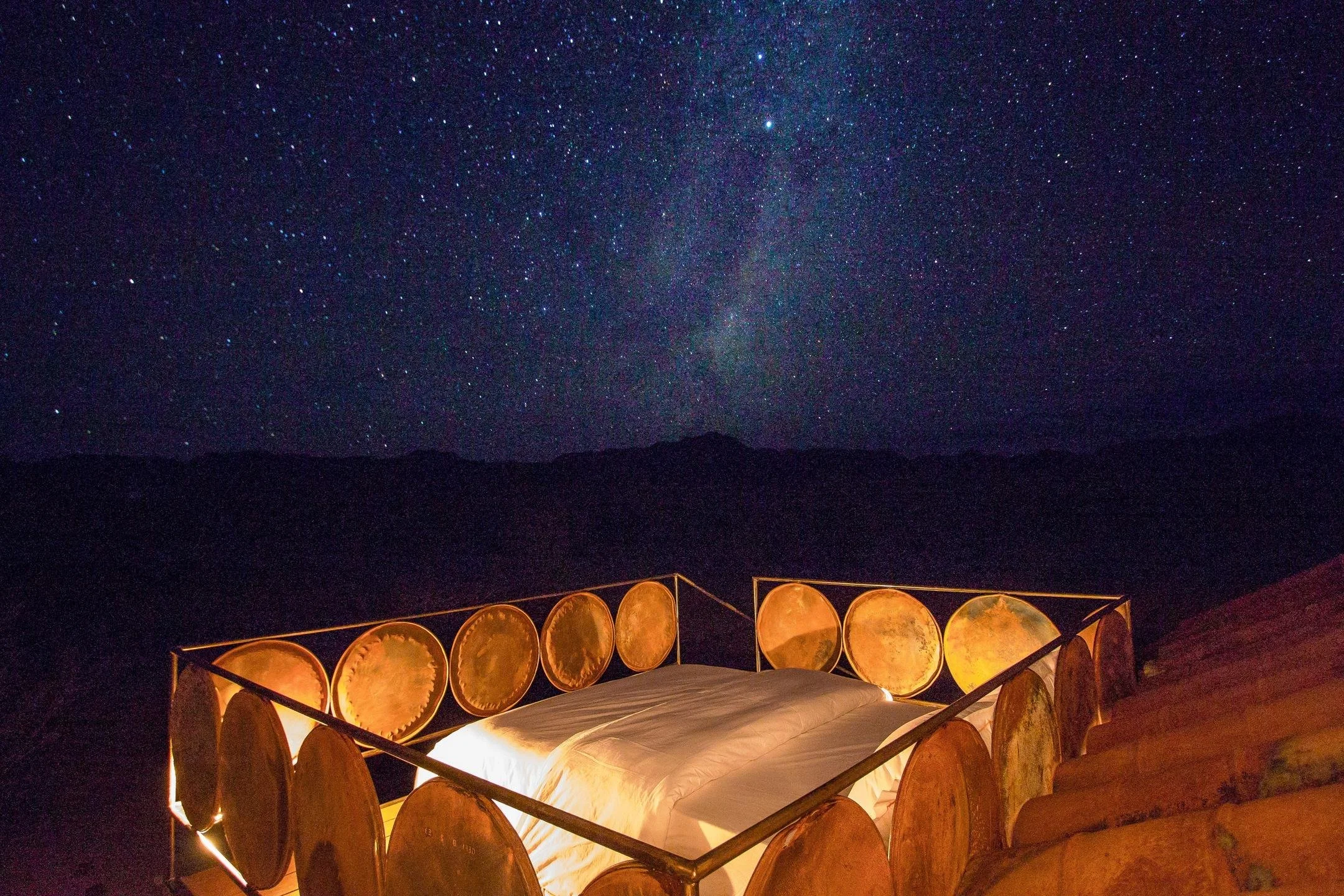
Photo Copyright: Camp Sossus
A Day-and-Night Itinerary, at a Glance
Days 1–3: Arrival in Windhoek and into Okonjima Nature Reserve, home of the AfriCat Foundation, for leopard tracking and carnivore research
Days 4–5: Etosha National Park and Ongava Game Reserve — waterhole game viewing, elephant, lion, and rhino
Days 6–9: Deep into Damaraland — tracking desert-adapted black rhino on foot with Save the Rhino Trust, searching for desert-adapted elephant across unfenced river systems
Day 9: Swakopmund, where the Namib Desert meets the Atlantic Ocean
Days 10–11: Sossusvlei and the Namib Tsaris Conservancy, including sunrise dune climbs and your first night in a star bed
Days 12–14: NamibRand Nature Reserve, one of the world's premier Dark Sky Reserves, with Megan Eaves-Egenes leading evening stargazing sessions and open-air sleep-outs
Day 15: Depart from Windhoek
Small-group only, limited to 10 travelers, departing February 27 – March 13, 2027.
Have questions about the Namibia Safari: Desert, Wildlife & Dark Sky journey? Reach out to our team— we're happy to walk you through it.