
Can we please redefine "well-traveled?"
Words and Image by Mark Jordahl
There is so much chatter these days about how 2026 will be the year that travelers want “authentic, meaningful” experiences rather than cookie-cutter trips. Oh wait…I meant that's the trend for 2025. Or, actually, “coming out of COVID, people are wanting more meaningful connections” ala 2022/2023.
The problem is, even though people say that’s what they want, for many people, travel is a competitive sport.
"Have you done Morocco?"
I have been a guide for 30 years. An international guide for 20. I lived in Uganda for 5 years and spent 6 months based out of a tiny one-room flat in the bustle and chaos of New Delhi. I have guided 3 seasons in Greenland and 4 seasons in Alaska, trained guides in Ecuador, and ridden out a storm in a broken-down boat on the Amazon in Brazil.
And yet, I am not "well-traveled" by the standards of our bucket list world.
On the trips I currently lead, it is not uncommon to have guests who have traveled to more than 100 countries. I've maybe been to 40 (believe it or not, I haven't counted). I'm basically just getting out of kindergarten.
On a recent trip I had a guest who kept asking me if I had "done" different countries. Had I "done" China? Had I "done" Morocco? The word "done" hit me like a brick upside the head. It felt so different from asking if I had "been" to those same places. Because can you ever really "do" a place?
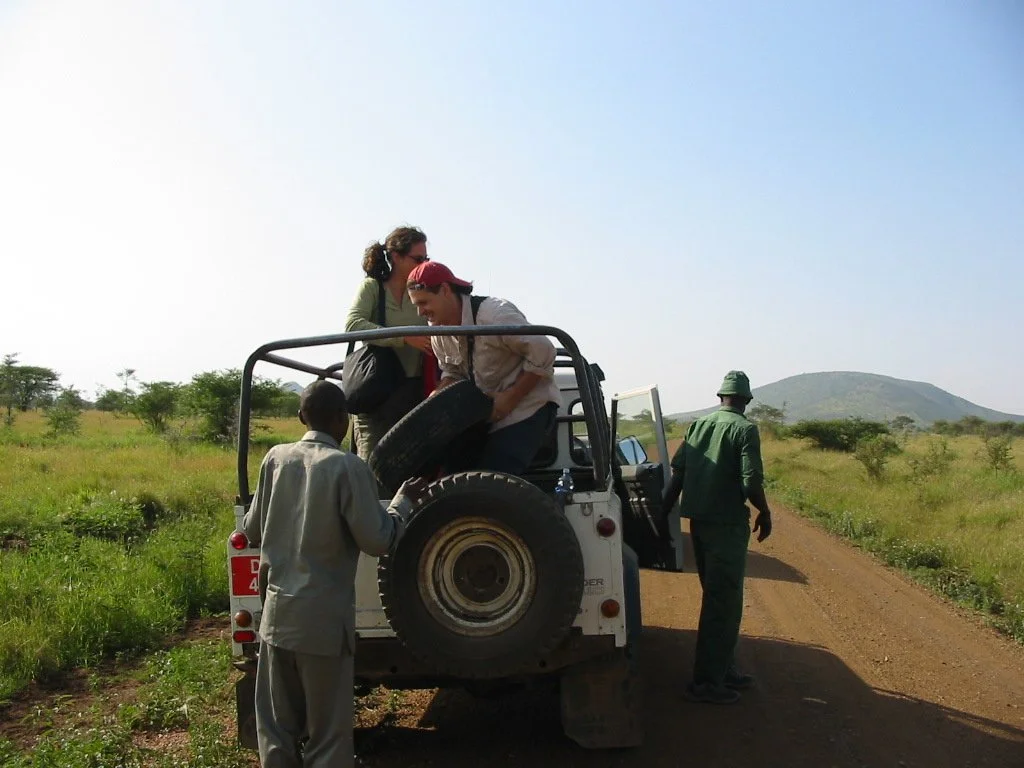
Meeting some rangers after attempting the Serengeti in our Toyota station wagon.
What are we traveling for?
Many years ago, I was leading a sea kayaking daytrip for a group of college students off Whidbey Island in Washington State. We got to talking about travel and asking where everyone had been. One student, maybe 20 years old, responded in a world-weary voice, "Everywhere."
I wasn't sure if I should feel amused, saddened, or revolted. As he talked, it became clear that his wealthy parents had taken him on international trips every school break. A couple of days here, a few days there.
I wanted to respond "So, you've really been...nowhere?"
Don't get me wrong. Parents should travel with their children. For American kids, especially, it’s crucial that they get out into the world and see that not every place is like their home. And those trips generally need to fit within the confines of limited school breaks and PTO.
But what lessons had this humble-bragging college student learned? That bouncing across the surface of a country is the same as knowing it. That the world exists for our entertainment. That the world's wonders are things to conquer and catalog so we can impress people at cocktail parties. That countries are “one and done.”
Should skimming across a bunch of countries make you well-traveled and help you “win” the travel game? Or should we value going deeper?
Time is a fundamental ingredient for Deep Travel
Those of us who make travel a part of our lives will always have some places that make us want to return, and others that don't. That's fine. There are places I have visited briefly that I am unlikely to return to. I know that my experience and understanding of those places will always be limited. Most likely, I simply never took the time to dig down to the wonders that exist in those places. Or, maybe, I just don’t like them.
My favorite national park in the world is Murchison Falls National Park in Uganda. I've been there more than 50 times, did my Master's fieldwork in and around the park, and wrote a guidebook to it.
But I still don't feel like I know it. It surprises me every time I go, and the more time I spend there the more questions I have.
But that's the challenge. "...the more time I spend there..."
We don't spend enough time in the places we visit.
That is partly a function of the busy lives we all lead. If I return to this place, it means I might never get to that place. That FOMO of hearing about “the best” place that we never got to.

Traveling like a local.
You can’t sell Deep Travel
Tour operators around the world rely on the bucket list mentality. They want to sell you the next trip to the next place. If you keep going back to the same destination, eventually you will know it well enough that you won’t need them anymore. And each time you go to the same place, you aren’t going to the next place.
Deep travel also involves a lot of “not doing.” If you want to get a sense of the flow of daily life of the people who live in a place, you can’t be constantly rushing from one national park to a waterfall to a museum to a boat excursion. You need to stop and talk to people. You need to spend three hours reading a book in a sidewalk café watching people going about their daily lives.
As a tour operator, how do you sell that?
When your guests are paying $1,500 per day, they want to be “getting their money’s worth” out of every moment. What would the marketing even look like? “Come join us as we relax for an afternoon in a café drinking wine overlooking the piazza in Prague!” (Ok, actually, that sounds pretty good. Maybe I’m wrong about this.)
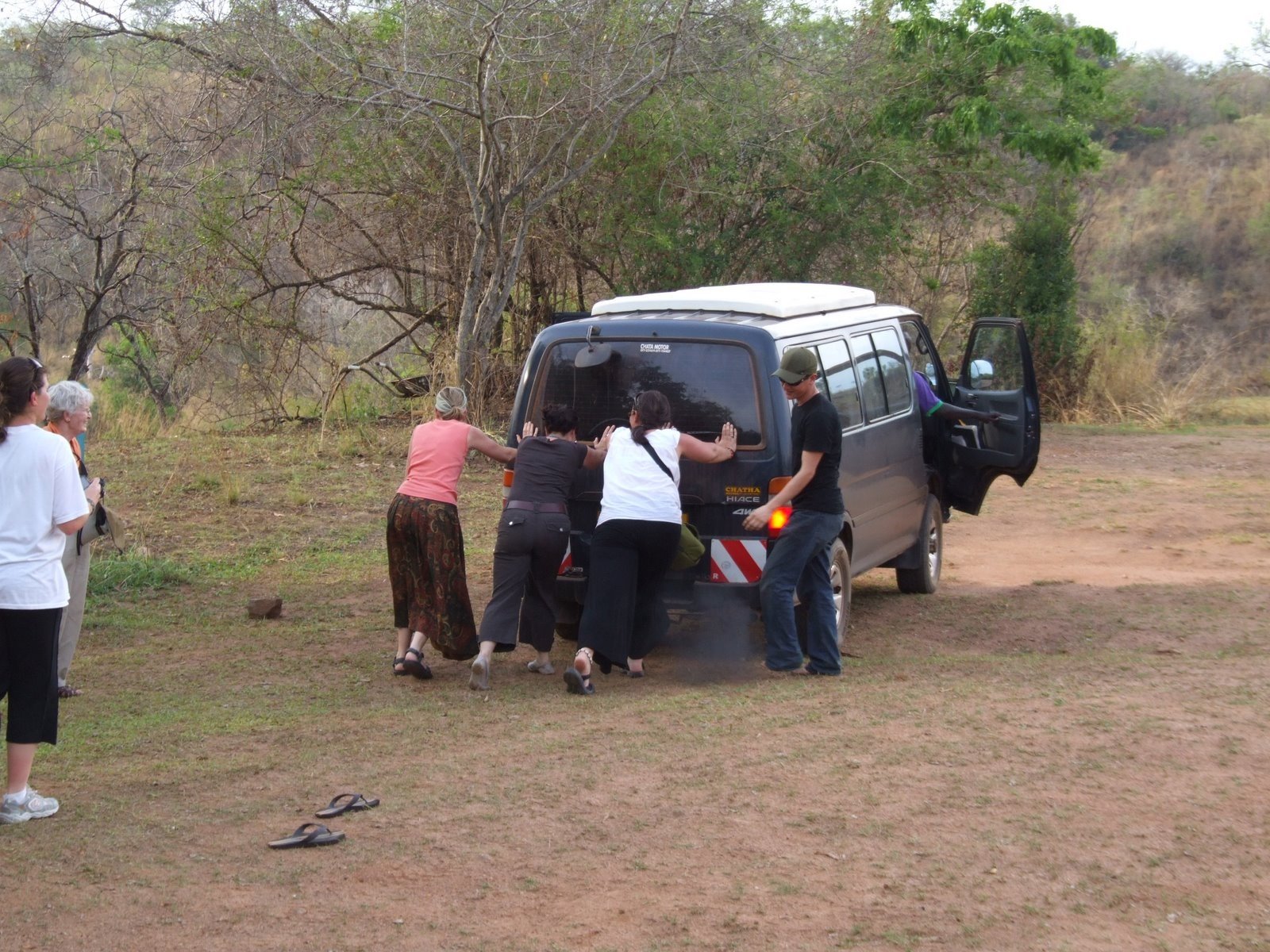
Sometimes a broken down vehicle turns into a teambuilding exercise. Photo credit: Mark Jordahl
What would a shift towards Deep Travel require?
It requires slowing down. It can be hard to shift gears from our busy lives, even on vacation. If you never just sit and observe the world in your regular life, do you even know how to do it somewhere else? Maybe before going on vacation, we need to practice for a month by going to a coffee shop every day, putting our phones away, and just sitting for 20 minutes.
It requires courage. Most typical tourist sites are sanitized, controlled environments. We might still be out of our comfort zones visiting these places in a new country, but we mostly know what to expect and the people there know how to deal with us. It’s more of a stretch to start up a conversation with a random person in a local market in Kenya, or to let yourself get swept up in a Carnival parade in Brazil with no idea where you will end up.
It requires a willingness to let go. Some of my most memorable travel experiences have happened when a vehicle has broken down, or a border has been unexpectedly closed, or I’ve just plain gotten lost. Those are the times when my faith in people has surged, because someone always stepped in to help. And those interactions have given me insight into cultures that I would never have gotten if everything had gone as planned.
It requires us to spend less and have a smaller carbon footprint! Well, it doesn’t require those, they are just nice fringe benefits.
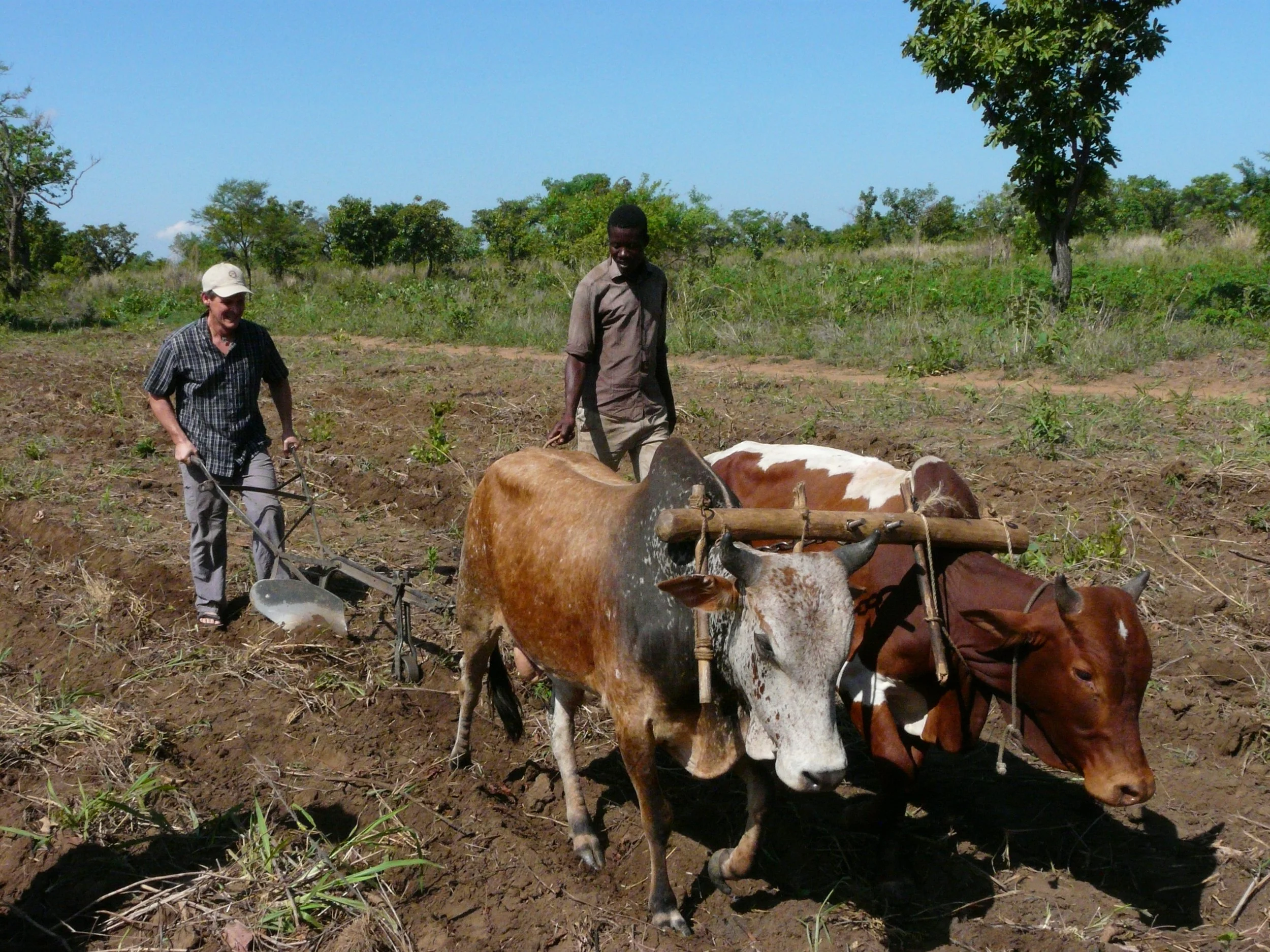
Learning to break ground with an oxplow in northern Uganda.
So, can we redefine “well-traveled?”
While it would be fun to create a checklist that includes things like how many times you have broken down in a foreign country, or in how many languages you have needed to try to communicate with police officers, that’s probably not the right approach.
For me, it comes down to two factors: time and depth, because you need to spend time to go deep.
I’m not looking for a new measurement to say “if you’ve spent at least one month in 5 places, you are now well-traveled.”
Maybe I just want us to change the goalpost from being well-traveled to being deeply traveled. To change the question from “Have you done Morocco” to “What has Morocco done to you?”
Ready to experience travel with depth and purpose?
Explore our upcoming journeys and take the next step toward a more meaningful way of seeing the world.
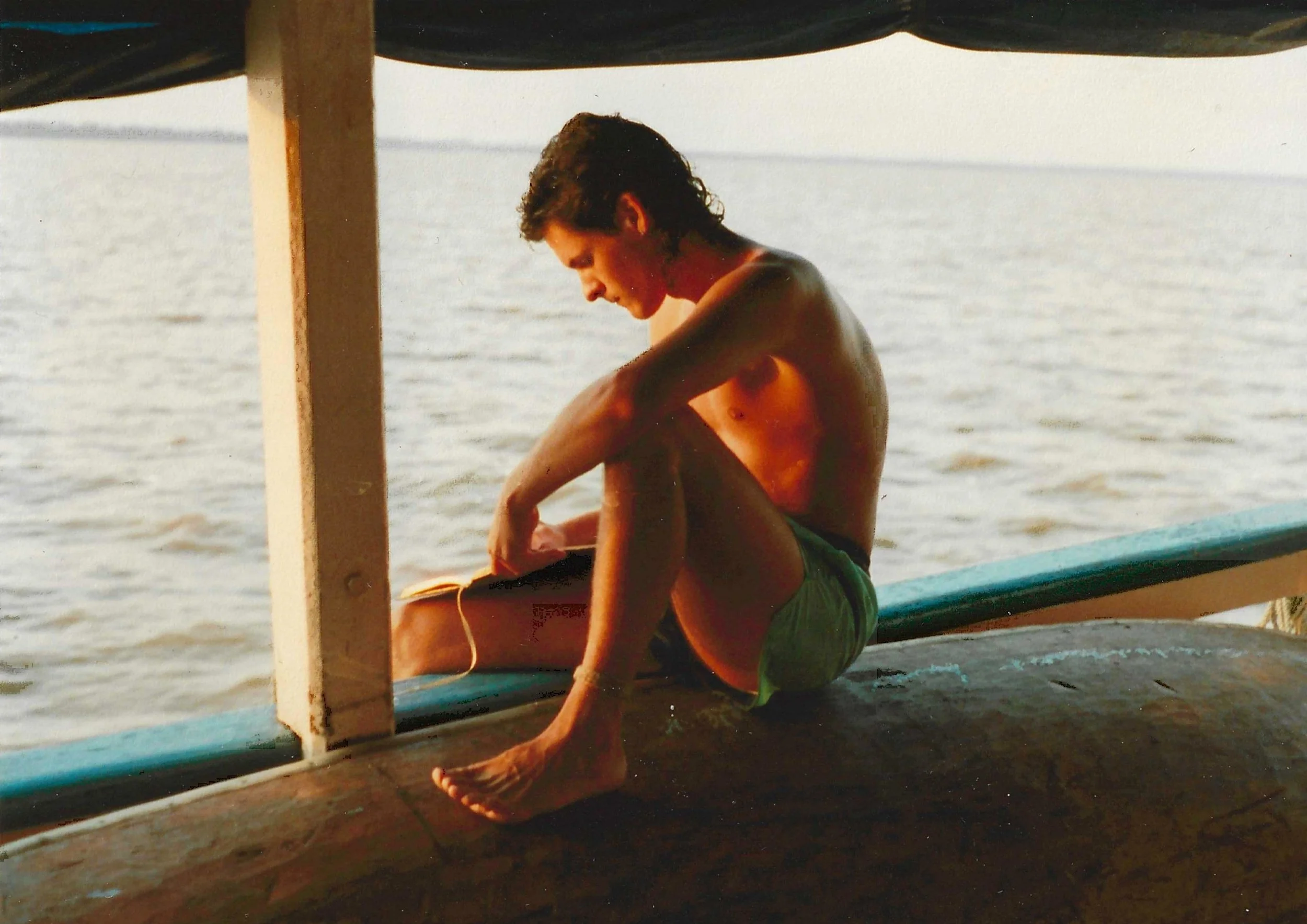
Mark Jordahl
With over 30 years of guiding and tourism management experience, he has devoted his life to helping people move beyond simply visiting wild places and into truly experiencing them. His work has been shaped by deep immersion in both place and culture. Today, through guiding and writing, he focuses on fostering meaningful connections to nature—using story, ecological insight, and thoughtful conversation to broaden perspectives and deepen understanding. His work is ultimately about stewardship: helping people feel more connected to the wild world, and more invested in its future.